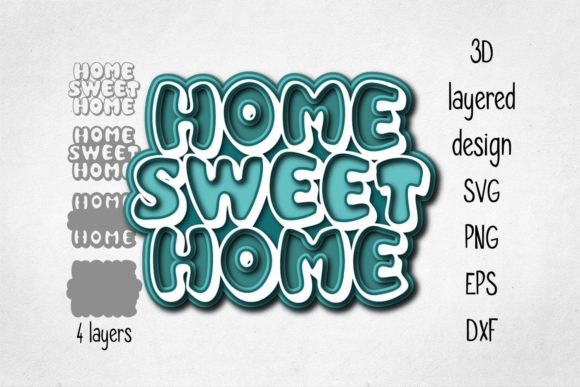
Transforming Spaces with the 3D Layered Home Sweet Home Design
The concept of a "home" has evolved beyond mere shelter into a canvas for personal expression, and modern crafting tools have provided the means to bring that expression to life in three dimensions. Among the most versatile digital assets available today is the 3D Layered Home Sweet Home design. This intricate piece of art leverages multilayer technology to create depth, shadow, and texture that flat prints simply cannot achieve. Whether you are a professional designer looking for high-end wall accents, a hobbyist seeking a meaningful weekend project, or an educator demonstrating spatial concepts, this design offers a unique opportunity to blend creativity with technical precision.
At its core, this design represents more than just text on a wall; it is an architectural study in miniature. By stacking multiple distinct layers, the artwork creates a dynamic visual experience where light and shadow interact differently depending on the viewing angle. The result is a tactile object that invites touch and appreciation from every perspective. The versatility of the 3D Layered Home Sweet Home pattern allows for infinite customization, making it a staple for anyone involved in home decor, gift-giving, or creative manufacturing.
The Mechanics of Multilayer Construction
Understanding how to execute a multilayer design is crucial for achieving the desired aesthetic. Unlike single-cut projects, this design relies on the strategic separation and reassembly of individual components. The file package includes a comprehensive SVG file containing all the necessary layers, allowing users to separate them within their cutting software before processing. This separation is not merely a technical step but a creative one, as it determines the final depth and dimensionality of the piece.
The design is engineered to be robust yet delicate. It consists of several distinct elements: the background frame, the central typography, decorative flourishes, and potentially additional thematic icons. When assembling the project, each layer acts as a platform for the next, building up the structure. The recommended approach involves using spacers or adhesive foam tape between layers to maintain consistent spacing. This technique ensures that the shadows cast by the upper layers fall naturally onto the lower ones, enhancing the 3D effect. Without proper spacing, the design may appear flat or cluttered, defeating the purpose of the layered construction.
One of the critical aspects of this design is the consideration of thin elements. Because the 3D Layered Home Sweet Home pattern includes fine details to ensure legibility and artistic flair, resizing requires caution. While the design is scalable, reducing the size below a certain threshold can compromise structural integrity. If the layers become too small, the thin connecting points may snap during the cutting process or fail to hold weight when assembled. Therefore, it is advisable to keep the widest point of the finished product over 8 inches (approximately 20 cm). For larger installations, such as commercial signage or grand entryways, scaling up is often beneficial as it accentuates the craftsmanship and makes the design easier to view from a distance.
Material Selection and Creative Applications
The beauty of this digital asset lies in its material agnosticism. While many crafters default to card stock for paper-based projects, the true potential of the 3D Layered Home Sweet Home design is unlocked through diverse materials. Each material brings a unique texture, weight, and finish to the table, altering the mood of the final piece.
- Card Stock: Ideal for beginners and those creating lightweight wall art. Card stock comes in a vast array of colors, allowing for high-contrast designs where the background layer differs significantly from the foreground text. It is also cost-effective for experimenting with different color combinations.
- Wood and Plywood: For a rustic or farmhouse aesthetic, wood is the superior choice. Cutting this design into plywood or basswood adds a natural grain texture that interacts beautifully with the layered depth. Staining the wood before assembly can highlight the edges and add warmth to the piece.
- MDF (Medium Density Fiberboard): MDF provides a smooth surface that is perfect for painting. If you plan to apply a specific paint color or a faux finish, MDF is an excellent substrate. It holds its shape well even when cut into complex shapes, ensuring the layers align perfectly.
- Plastic and Acrylic: For a modern, sleek look, clear or colored acrylic sheets offer a contemporary twist. The transparency of acrylic can create interesting visual effects when light passes through the layers, adding a glow to the "Home Sweet Home" message.
Beyond standard wall decor, the applications for this design extend far beyond the living room. In a retail setting, these layered signs can serve as eye-catching displays in boutique shops or cafes, reinforcing brand identity with a welcoming message. Educators might use scaled-down versions of the design to teach students about geometry, layering, and spatial relationships in a hands-on manner. Furthermore, business owners can utilize these items as branded merchandise or corporate gifts, showcasing attention to detail and quality.
Customization Through Color and Composition
One of the most compelling features of the 3D Layered Home Sweet Home kit is the freedom it offers regarding color palettes. You are not restricted to a single theme; instead, you can curate a look that matches any interior style. A monochromatic scheme, where each layer is a slightly different shade of the same color, creates a subtle, sophisticated gradient effect. Alternatively, a high-contrast combination, such as black text on a white background with gold accents, can make the sign pop in a dimly lit hallway.
The modular nature of the design allows you to use all layers or select only a subset. If a full-scale sign feels too overwhelming for a specific space, you might choose to isolate the central "Home Sweet Home" text and pair it with just one decorative border. This selective approach simplifies the assembly process while retaining the 3D charm. It also opens the door to creating smaller variations, such as keychains, ornaments, or desk plaques, provided the scale remains large enough to preserve the thin elements.
Color combinations should also consider the lighting conditions of the intended location. In rooms with abundant natural light, lighter colors like pastels or whites work well, reflecting the sunlight and brightening the space. In contrast, darker tones absorb light and create a cozy, intimate atmosphere, making them suitable for reading nooks or dining areas. The ability to mix materials further enhances this customization; for instance, pairing a wooden background layer with metallic foil layers for the text can create a luxurious juxtaposition of textures.
Technical Specifications and File Compatibility
To ensure a successful project, understanding the technical deliverables is essential. Upon purchase, you will receive a single ZIP folder containing four distinct file formats, each serving a specific purpose in the workflow. This variety ensures compatibility with a wide range of machines and software, from desktop computers to industrial plotters.
- SVG File: Scalable Vector Graphics are the industry standard for cutting machines like Cricut and Silhouette. This file contains all the layers grouped together, allowing for easy editing and manipulation within vector software. It is the primary format used for designing the layout and sending cuts to your machine.
- PNG File: Provided at 300 dpi with a transparent background, this raster image is useful for visualization, printing, or importing into design programs that do not support vectors. It allows creators to see exactly how the layers stack without needing to open the vector file.
- EPS File: Encapsulated PostScript files are widely used in professional graphic design and printing workflows. They retain vector data and are compatible with Adobe Illustrator and other professional design suites, offering high fidelity for print production.
- DXF File: Drawing Exchange Format is specifically optimized for CNC routers and laser cutters. If you are working with heavier materials like thick wood or metal, the DXF file ensures precise coordinates for your cutting path, minimizing errors and material waste.
It is imperative to verify that your cutting machine or software is compatible with at least one of these formats before beginning. Most modern hobbyist machines support SVG, while industrial equipment often prefers DXF or EPS. Ensuring compatibility prevents frustration during the setup phase and guarantees that the intricate details of the 3D Layered Home Sweet Home design are reproduced accurately.
Considerations for Professional and Educational Use
For professionals and educators, the 3D Layered Home Sweet Home design serves as a case study in digital fabrication. In a classroom setting, it can demonstrate the importance of file organization, layer management, and material properties. Students learn that a design is not just an image but a set of instructions for physical creation. They explore how changing the material thickness affects the final assembly and how color theory applies to three-dimensional objects.
In a professional context, the design highlights the value of scalability and adaptability. Business owners can use these assets to create custom products for niche markets, such as wedding favors, nursery decorations, or real estate staging props. The ability to resize the design (within limits) allows for a product line that caters to various price points and customer needs. However, professionals must remain mindful of the structural limitations mentioned earlier; pushing the design too small can lead to product failures and dissatisfied customers.
The durability of the final product also depends on the finishing techniques employed. Sealing wood layers with varnish or spray sealant can protect against humidity and wear, extending the lifespan of the decor. For plastic or acrylic, careful cleaning methods are required to avoid scratching the surface. These considerations underscore the importance of treating the digital file as a blueprint for a physical object that must withstand environmental factors.
Conclusion
The 3D Layered Home Sweet Home design stands as a testament to the intersection of digital artistry and tangible craftsmanship. Its multilayer architecture offers a depth of field that captivates viewers, while its flexibility in materials and colors ensures it fits seamlessly into any environment. From the detailed SVG files that guide the cutting process to the robust physical results achieved with wood or plastic, this project encapsulates the best of modern DIY culture.
Whether you are creating a heartfelt gift for a loved one moving into a new house, producing a signature piece for your own home, or developing a product line for your business, this design provides a solid foundation for success. By respecting the technical requirements, selecting appropriate materials, and embracing the creative possibilities of layering, you can transform a simple digital file into a lasting piece of art that truly embodies the spirit of "Home Sweet Home."