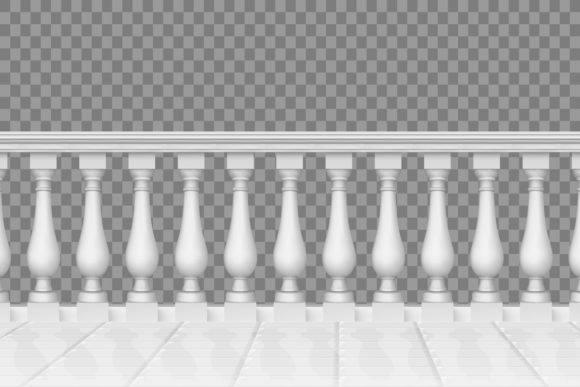
Realistic Balustrade
In the realm of digital asset creation, particularly for projects requiring classical aesthetics, the distinction between a generic placeholder and a production-ready graphic is often defined by level of detail and technical compatibility. The Realistic Balustrade asset serves as a critical component in this workflow, offering a high-fidelity visual element that bridges the gap between conceptual sketching and final media output. For professionals ranging from 3D modelers and graphic designers to marketers creating promotional material for cultural institutions, having access to accurate architectural details is not merely an aesthetic choice but a functional necessity.
This specific product—a realistic balustrade illustration designed for Greek media materials—provides a versatile solution for classical projects. It is delivered in two primary formats: one EPS10 file and a 72ppi resolution JPEG preview. Understanding how these formats function within a modern digital workflow allows creators to maximize efficiency, ensure consistency across platforms, and maintain high quality control throughout the project lifecycle. The following analysis explores how to integrate this asset into various stages of design, marketing, and educational content creation.
Understanding the Asset Architecture
The value of the Realistic Balustrade lies not just in its visual appearance but in its structural composition. The inclusion of an EPS10 file indicates that the core vector data is preserved. This is significant for any professional workflow because it allows for infinite scalability without loss of quality. Whether you are designing a billboard for a museum exhibition or a mobile-friendly social media post, the vector source ensures that the intricate details of the balustrade—such as the fluting on the columns or the curvature of the handrail—remain crisp and legible.
Conversely, the provided 72ppi Resolution JPEG acts as an immediate preview asset. In fast-paced environments, such as editorial planning or rapid prototyping, designers often need to visualize layout concepts before committing to heavy vector files. The JPEG serves this purpose perfectly, allowing for quick placement in wireframes or mood boards. However, it is crucial to recognize the limitation of this format: it is raster-based and tied to a specific pixel dimension. Using the JPEG for large-format prints will result in pixelation, whereas the EPS10 remains viable for any size requirement.
Integration into Pre-Production Planning
Before any rendering or final design begins, the preparation phase involves gathering reference materials and establishing visual guidelines. Here, the Realistic Balustrade fits seamlessly into the research and mood-setting stage. For educators or bloggers creating content about classical architecture, history, or art, this asset provides an immediate visual anchor.
- Mood Boarding: Designers can drag the JPEG preview directly into tools like Adobe Photoshop or Affinity Designer to test color palettes and compositional balance. This helps determine if the "Greek" aesthetic aligns with the broader brand identity of the project.
- Reference Accuracy: For historical accuracy, the realistic nature of the balustrade allows planners to verify proportions against real-world examples. This reduces the risk of anachronisms in media materials intended for academic or cultural distribution.
- Stakeholder Communication: When pitching ideas to clients or team members, showing a realistic preview rather than a description builds trust. The tangible quality of the image communicates professionalism and attention to detail early in the process.
Workflow Implementation During Design
Once the concept is approved, the transition to active design requires leveraging the full power of the EPS10 file. This is where the technical specifications of the asset truly impact efficiency and output quality.
Vector Manipulation and Customization
Because the main file is in EPS10 format, it can be opened in vector graphics software such as Adobe Illustrator, CorelDRAW, or Inkscape. This opens up several practical use cases:
- Color Adaptation: If a project requires a monochromatic scheme or a specific brand color palette, the fill colors of the balustrade can be altered instantly. This is far more efficient than manually recoloring a raster image, which often leads to muddy gradients or artifacts.
- Scale Adjustment: As mentioned, the vector nature allows the balustrade to be scaled up for print headers or down for favicon-sized icons without degradation. This flexibility is essential for responsive web design and multi-channel marketing campaigns.
- Layer Organization: Depending on how the file was constructed, individual components of the balustrade (e.g., posts, rails) may be grouped or isolated. This allows designers to deconstruct the element, using only parts of it to create custom patterns or borders, thereby increasing the versatility of the single purchase.
Compatibility with 3D Environments
For 3D graphic designers, the term "illustration" might suggest a 2D overlay, but realistic assets often serve as textures or displacement maps. While the EPS10 is primarily a vector format, the realism depicted suggests it could be used as a reference for sculpting a 3D model or as a texture map in software like Blender or Maya. The clean lines of the vector file help in maintaining geometric precision when extruding or modeling similar structures, ensuring that the final 3D render matches the illustrative style intended for the Greek media material.
Post-Production and Quality Control
After the design work is complete, the focus shifts to quality control and distribution. This is where understanding the difference between the EPS10 and JPEG becomes vital for preventing costly errors.
File Management: A robust workflow includes organizing assets by format and usage. Store the EPS10 file in a central library tagged with keywords like "classical," "architecture," "vector," and "Greek." Use the JPEG only for temporary viewing or low-resolution web previews. This prevents accidental upload of low-res images to print servers, a common mistake that can delay project timelines.
Consistency Across Media: In today’s multi-platform landscape, a campaign might run on Instagram, a website, and printed brochures. By deriving all versions from the same EPS10 source, you guarantee that the balustrade looks identical across all touchpoints. This consistency reinforces brand recognition and professional credibility, especially important for publishers and small business owners who rely on a cohesive visual identity.
Long-Term Value and Scalability
Investing in high-quality, editable assets like the Realistic Balustrade offers long-term benefits that extend beyond a single project. For freelancers and agencies, building a library of such detailed, scalable elements reduces future workload. Instead of commissioning new illustrations for every classical-themed project, teams can repurpose existing assets, adapting them to new contexts through simple edits.
Furthermore, the realistic nature of the asset makes it suitable for diverse applications beyond traditional graphic design. It can be used in:
- Educational Materials: Textbooks and online courses on art history benefit from accurate, clear visuals that students can zoom in on without losing clarity.
- Event Marketing: Posters for classical music concerts, theater performances, or archaeological conferences require imagery that evokes timelessness and elegance.
- Interior Design Presentations: Architects and interior designers can use the balustrade to visualize railing designs in client proposals, providing a realistic preview of how the structure will look in a built environment.
Practical Tips for Integration
To ensure smooth integration of the Realistic Balustrade into your workflows, consider the following best practices:
Check Color Profiles: When converting from the EPS10 (often CMYK for print) to JPEG (often RGB for screen), always check the color profile settings. Mismatches can lead to duller colors on screen compared to the original design intent. Use soft-proofing techniques in your design software to anticipate how colors will translate.
Optimize Export Settings: When exporting from the vector file for web use, do not simply save as JPEG. Use export tools that allow you to set compression levels and dimensions precisely. This keeps file sizes small for faster loading times while maintaining sufficient quality for digital viewing.
Document Your Process: If you modify the balustrade significantly, keep a record of the changes. This is useful for version control, especially if multiple team members are working on the same project. Knowing which elements were edited and how they were altered helps maintain consistency if revisions are needed later.
Conclusion
The Realistic Balustrade is more than just a decorative image; it is a functional tool that enhances the precision and efficiency of classical media production. By leveraging both its vector and raster components effectively, professionals can streamline their workflows, ensure cross-platform consistency, and deliver high-quality results. Whether you are preparing a presentation, designing a website, or producing print media, integrating this asset into your process supports a more organized, adaptable, and professional approach to creative execution.